History and Legends of the Thistle

If you have ever been to Scotland it is hard to miss the profusion of spunky purple-headed flowers known as the thistle. Considered a nuisance by farmers, this tough little bloom has been revered throughout history. The first flower to ever have the distinction of becoming a symbol for an entire nation, Scotland,it is also credited with winning the day for the Scots during an ancient battle.
In earlier times Scotland was a land of many battles, but only one where a little purple flower saved the day. It was 1263 when King Haakon’s fleet of battle hardened Norsemen was blown off course and landed on the shores of Largs in Ayrshire. To their delight there was a sleeping Scottish army nearby. Not suspecting an attack, the Scottish were doomed to suffer an ambush. The Norsemen removed their boots in preparation for sneaking up on the slumbering soldiers. Fortunately, a field of thorny thistle flowers surrounded the Scottish. One Norse soldier, stepping on a thorn, yelled out in pain. This scream woke the Scottish men, who jumped into action and slaughtered the invading Norsemen. No wonder the thistle is part of Scotland’s coat of arms!
Afterwards, the thistle was given high honor by becoming the national flower. It first appeared on silver coined minted in 1474. It’s image is part of the regalia for the The Most Ancient and Noble Order of the Thistle, an ancient chivalric order in Scotland founded by King James VII/II. Even the unofficial national anthem of Scotland sings the praises of this tough little bloom, “Flower of Scotland” can be heard playing on bagpipes all over this proud nation.

Christian Beliefs Connected to the Thistle
The history and legend connected to the thistle doesn’t end with Scotland. Thistles have been significant symbols from pagan to early Christian times. In early Christian beliefs, the Virgin Mary is associated with thistles. The travelling mother of Jesus was overcome with thirst when she came across a cow. Plucking the broad leaf of a thistle and folding it to use as a cup enabled her to quench her thirst on the cow’s milk. Thereafter, the Virgin Mary declared that flower as her own.

So whether you hand a thistle on your door or wear any piece of thistle jewelry, this lovely little flower will keep you well protected!
Here are some other cultural thistle symbols:
- Celtic cultures believe the thistle symbolizes devotion, bravery, determination, and strength.
- In the Basque region of France, the thistle represents protection and is hung on front doors.
- In Romania the thistle is a good luck charm.
- Many pagan cultures believe the thistle has magical properties. It is believed to repel thieves, ward off evil, and is a tool for purification.
- The purification and protection powers of the thistle were once considered so strong it was used as a remedy for the plague!

Thistle Jewelry for the New Bride
Scottish thistle jewelry carries a deep sense of heritage, pride, and symbolism, making it a meaningful choice for a bride who wishes to honor her Scottish roots on her wedding day. Incorporating the thistle into bridal attire—whether through a delicate necklace, a brooch pinned to a sash, or intricate earrings—creates a subtle yet powerful connection to centuries of tradition. For many brides, this small but thoughtful detail becomes a personal statement, weaving family history and cultural identity into one of life’s most significant moments.
The thistle has long been regarded as the most popular symbol in Scottish jewelry. Its distinctive shape, with sharp spines and a soft bloom, lends itself beautifully to artistic interpretation in metals such as silver and gold.
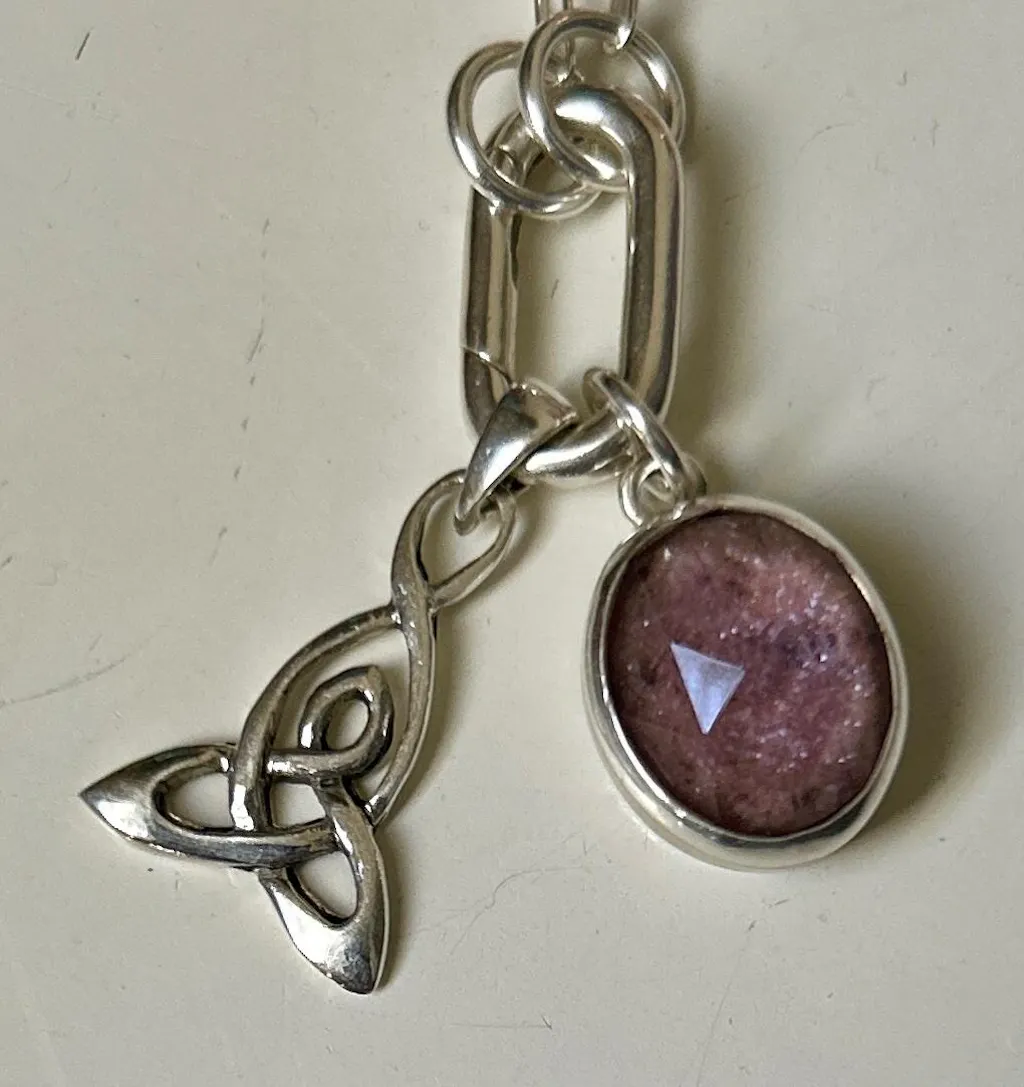
Jewelers have crafted thistle designs for generations, often combining them with Celtic knots or engraved patterns to enhance their meaning. Because of its widespread recognition, the thistle is not only a decorative motif but also a proud emblem that instantly evokes Scotland’s rich cultural legacy.
Wearing thistle jewelry on a wedding day is more than a stylistic choice—it is a tribute to Scotland itself. The thistle has been associated with the nation for centuries, symbolizing resilience and protection. According to legend, it once played a crucial role in defending Scotland from invaders, its prickly exterior serving as a natural warning. This story, whether historical or mythical, has helped cement the thistle’s place as a national icon. By incorporating it into bridal jewelry, a bride honors this legacy, carrying a piece of Scotland’s enduring spirit with her as she begins a new chapter of life.

Scottish Thistle Jewelry to Represent Your Personal Strength
Beyond its national significance, the thistle also holds a deeply personal meaning. It represents strength, perseverance, and the ability to overcome adversity. Its rugged exterior protects a delicate bloom, reminding us that beauty and resilience can coexist. For a bride, this symbolism can feel especially powerful. Wearing thistle jewelry can serve as a quiet affirmation of inner strength and the courage to navigate whatever the future may bring.
In this way, Scottish thistle jewelry becomes more than an accessory—it transforms into a meaningful heirloom. Whether newly purchased or passed down through generations, it carries stories, values, and identity. As a bride walks down the aisle adorned with the thistle, she is not only celebrating her love but also embracing her heritage and the enduring qualities it represents. The result is a wedding detail that is both elegant and deeply significant, rooted in tradition yet timeless in its message.


 English
 Chinese (Simplified)
 French
 German
 Italian
 Japanese
 Russian
 Spanish