

The Irish Harp: Symbol of Heritage, Melody, and Adornment

The Irish harp, with its graceful curves and resonant strings, stands as one of the most enduring emblems of Ireland. More than a musical instrument, it embodies centuries of cultural resilience, artistic mastery, and national identity. From ancient Celtic origins to its modern role in Irish jewelry and symbolism, the harp weaves a story of triumph, tragedy, and revival. This article explores its historical evolution, its integration into Irish jewelry traditions, and the profound reasons why people worldwide continue to wear it as a personal talisman.
Ancient Origins: The Harp in Celtic Ireland
The harp's roots in Ireland trace back over a millennium, predating many other European stringed instruments. Archaeological evidence suggests that harps were played in Ireland as early as the 8th century AD, though oral traditions and myths push their presence even further into the prehistoric Celtic era.
The earliest Irish harps were small, portable instruments known as cláirseach (from the Irish word for harp). Crafted from willow wood with brass or bronze strings, these were wire-strung harps that produced a bright, metallic tone distinct from the gut-strung harps of continental Europe. They were played by professional harpers (cláirséoirí) who held exalted status in Gaelic society. Under the Brehon laws—the ancient Irish legal system—harpers ranked among the highest artisans, alongside poets and brehons (judges). A harper's role extended beyond entertainment; they preserved genealogy, history, and satire through music, serving as cultural custodians for chieftains and kings.
Iconic figures like the blind harper Turlough O'Carolan (1670–1738) exemplify this tradition. Often called the "last of the great Irish bards," O'Carolan composed hundreds of tunes, blending Baroque influences with native melodies. His works, such as "Carolan's Concerto," highlight the harp's versatility and emotional depth.
By the medieval period, the harp had become synonymous with Irish nobility. The Brian Boru harp, preserved in Trinity College Dublin and dating to the 14th or 15th century, is a prime survivor. Named after the legendary High King Brian Boru (who died in 1014 AD), it features intricate carvings of mythical beasts and symbolizes the instrument's royal associations—though Brian himself likely never played it.

Revival and National Symbolism
The 19th-century Irish Revival movement reclaimed the harp. Figures like Thomas Moore, whose Irish Melodies (1808–1834) set poems to harp-inspired tunes, romanticized it for a global audience. The harp became a potent symbol of Irish nationalism during the fight for independence.
In 1922, when the Irish Free State was established, the harp was adopted as the official state emblem—appearing on coins, the presidential seal, and passports. It's the only country whose national symbol is a musical instrument. Guinness brewery famously trademarked a version in 1876, blending commerce with culture (though their harp faces right, opposite the state's left-facing design to avoid confusion).
Today, the Irish harp thrives in folk music, with ensembles like The Chieftains and soloists like Máire Ní Chathasaigh keeping the wire-strung tradition alive. Modern luthiers craft replicas, ensuring the cláirseach endures.
The Harp in Irish Jewelry: Craftsmanship and Motifs
Irish jewelry has long incorporated the harp, transforming it from instrument to wearable art. Celtic artisans, renowned for metalwork since the Iron Age (evidenced by treasures like the Broighter Hoard), adapted harp motifs into brooches, pendants, rings, and earrings.
Historical Jewelry Traditions
- Early Medieval Period: The Tara Brooch (8th century AD), a masterpiece of pseudo-penannular design, features filigree and interlacing that echo harp string patterns. While not a harp itself, it represents the intricate gold and silver work that would later adorn harp-inspired pieces.
- Victorian Era Revival: During the Celtic Revival (late 19th century), jewelers like those in Dublin's Grafton Street crafted Claddagh rings and harp brooches in gold, often set with emeralds or Connemara marble. The harp pendant became a staple, symbolizing harmony and heritage.
- Modern Craftsmanship: Contemporary Irish designers, such as those from the House of Waterford or independent silversmiths in Kilkenny, use sterling silver, 9ct or 14ct gold, and gemstones. Techniques include hand-engraving strings for realism.
A popular design is the "Trinity Harp," blending the harp with the triquetra (Trinity knot), merging Christian and pagan symbolism.
Jewelry often draws from the Brian Boru harp's decorations: dragons, zoomorphic animals, and Celtic knots representing eternity. Materials reflect Ireland's landscape—green stones for the Emerald Isle, pearls for its coasts.

Shop Related Pieces
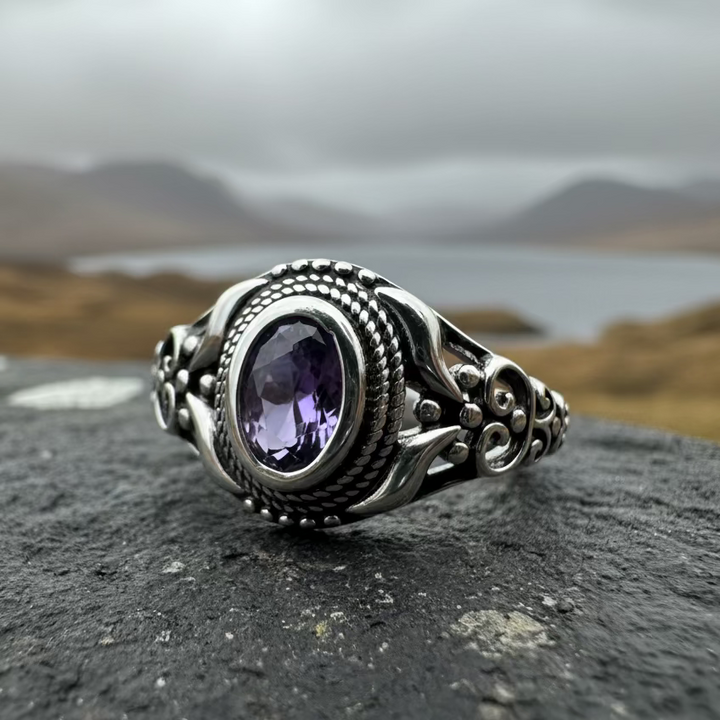
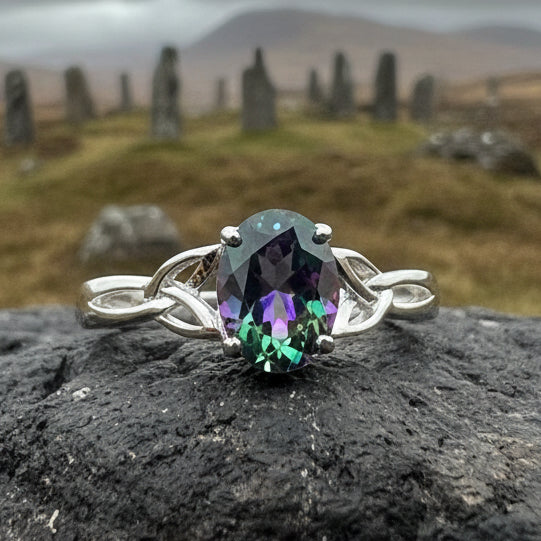
Scottish Twilight Celtic Ring in Sterling Silver
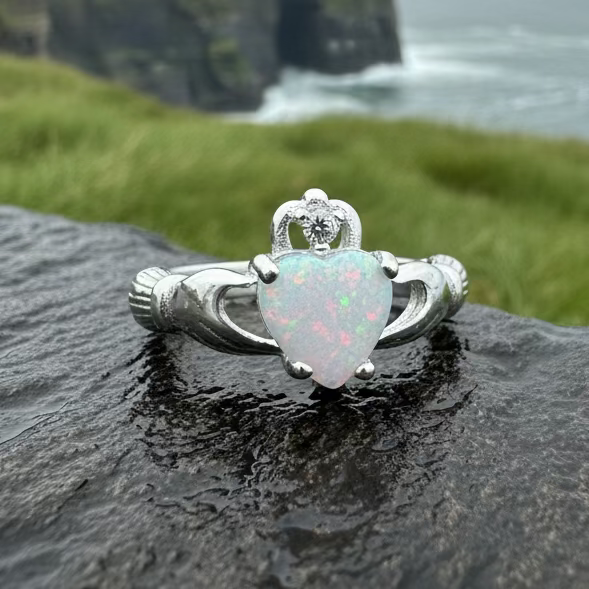
White Fire Opal Irish Claddagh Ring in Sterling Silver
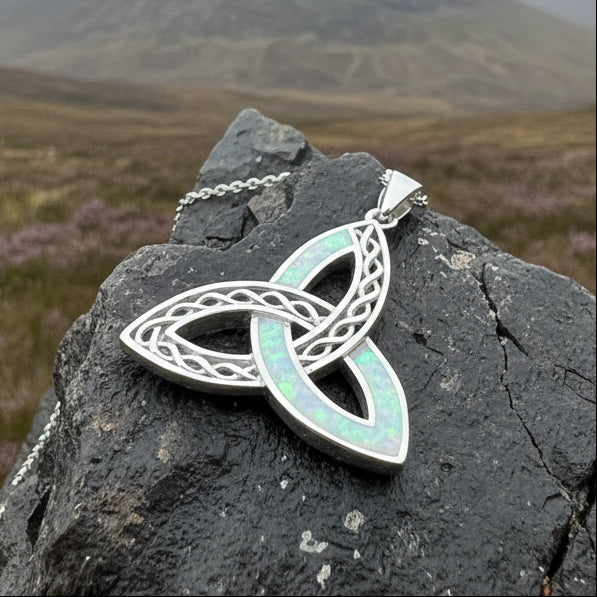
Fire Opal Celtic Knot Necklace in Sterling Silver
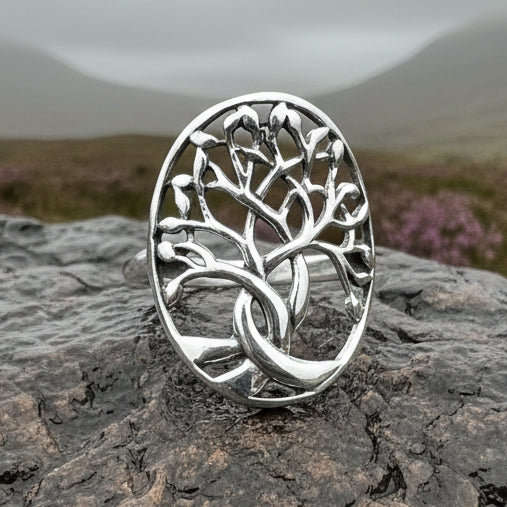
Rona Celtic Tree of Life Ring in Sterling Silver
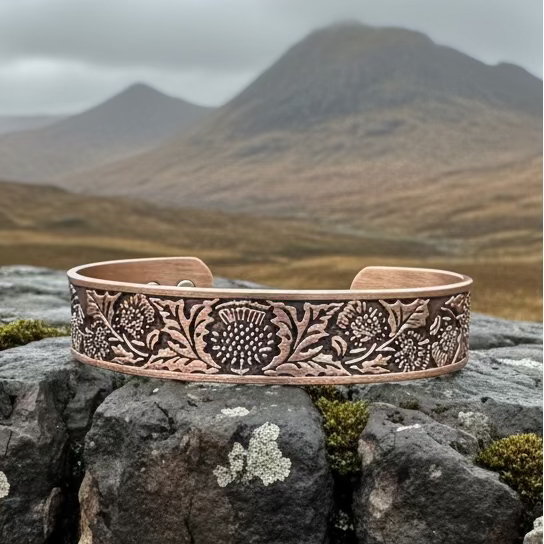
Scottish Thistle Copper Cuff Bracelet

Irish Saint Brigid Cross Necklace - Handmade in Ireland
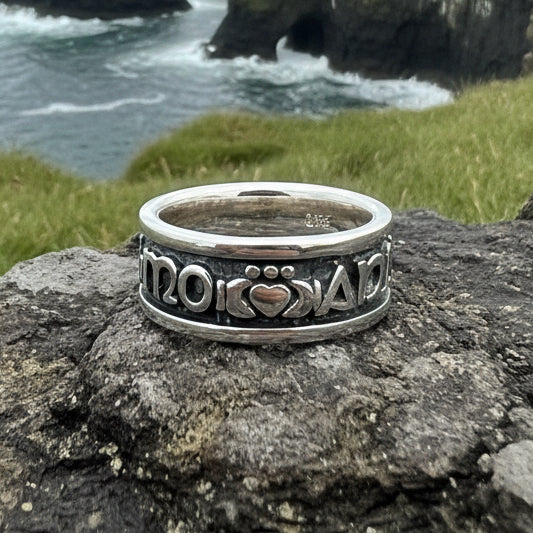
Irish Gaelic Soulmate Ring in Sterling Silver
Why People Wear the Harp: Identity, Pride, and Connection
Wearing a harp is more than fashion; it's a declaration of identity and values.
Key Takeaways
- Discover the rich meaning and heritage behind the irish harp: symbol of heritage, melody, and adornment.
- Explore handcrafted Celtic jewelry pieces inspired by these timeless traditions.
- Browse our collection to find an authentic piece that connects you to Celtic culture.
- Cultural and National Pride: For the Irish diaspora (over 70 million worldwide claim Irish ancestry), a harp necklace or pin connects wearers to roots. It's common at St. Patrick's Day parades, Irish weddings, or family reunions. In Ireland, it's worn by politicians, musicians, and everyday folk to affirm Éireannach (Irishness).
- Symbol of Resilience: The harp's survival through oppression mirrors Ireland's history. As poet W.B. Yeats noted, it represents "the old bitter tale of the harps of the nation." Wearers honor ancestors who defied colonial bans.
- Musical and Artistic Inspiration: Musicians and artists don harp jewelry as a muse. It evokes melody, creativity, and the bardic tradition—qualities like harmony in relationships or personal growth.
- Spiritual and Protective Meanings: In Celtic lore, the harp wards off evil, its strings vibrating with cosmic energy. Some view it as a bridge between worlds, akin to Orpheus's lyre.
- Fashion and Sentiment: Tourists buy harp earrings in Dublin shops as souvenirs, while gifts mark milestones—graduations, births, or emigrations.
Conclusion: A Timeless Echo
From the halls of ancient kings to the necks of modern wearers, the Irish harp resonates as a thread of continuity. Its history reflects Ireland's soul: poetic, defiant, and eternally melodic. Whether strummed in a pub session or glinting on a pendant, it invites us to listen—to stories of the past and harmonies of the future. In jewelry, it becomes personal, a small but mighty emblem reminding us that culture, like music, endures when carried close to the heart.

