

The Trinity Knot: A Timeless Symbol in Celtic Jewelry
The Trinity Knot, also known as the Triquetra, is one of the most iconic and enduring symbols in Celtic art. Characterized by its interlocking, continuous loop forming three pointed ovals, this elegant design has captivated people for centuries. From ancient stone carvings to modern silver pendants, the Trinity Knot bridges the pagan past of the Celts with contemporary spiritual and cultural expressions. This article explores its historical origins, its role in Celtic jewelry, and the multifaceted reasons why people continue to wear it today.

Origins in Ancient Celtic and Pre-Celtic Art
The Trinity Knot predates Christianity in Ireland and Britain, emerging during the Iron Age (roughly 500 BCE to 400 CE) among the Celtic peoples of Europe. Archaeological evidence shows similar interlocking designs on artifacts from the La Tène culture, a Celtic artistic style that flourished across continental Europe and the British Isles around 450 BCE. These early motifs appear on metalwork, pottery, and stone crosses, often symbolizing concepts of eternity, interconnectedness, and the cycles of life due to the knot's endless, unbroken path.
One of the earliest prominent examples is found in the Book of Kells, an illuminated manuscript created around 800 CE by Celtic monks in Ireland or Scotland. Here, the Triquetra adorns intricate gospel pages, blending pre-Christian Celtic knotwork with emerging Christian iconography. High crosses from the 8th to 12th centuries, such as those at Monasterboice in Ireland, feature the knot prominently, suggesting its adaptation into a Christian context.
Scholars debate its exact pre-Christian meaning. Some link it to triple goddesses in Celtic mythology—like the Morrígan, who embodied war, fate, and sovereignty in three aspects—or to natural triads such as earth, sea, and sky. Others see it as a solar symbol or a representation of the three realms: land, sea, and sky. Unlike more complex knots with multiple strands, the Trinity Knot's simplicity made it versatile for carving into stone or weaving into manuscripts.

Evolution in Celtic Jewelry
Celtic jewelry, renowned for its intricate metalwork, elevated the Trinity Knot into a wearable art form. The Celts were master goldsmiths and silversmiths, producing torcs (neck rings), brooches, and rings as early as the Bronze Age (c. 2000 BCE). By the Insular Art period (5th–9th centuries CE), following the Roman withdrawal from Britain, Celtic artisans in Ireland and Scotland developed a distinctive style of interlacing patterns, including knots, spirals, and animal motifs.
The Trinity Knot became a staple in this tradition:
- Materials and Techniques: Early pieces used gold, silver, bronze, and enamel. Torcs from the Broighter Hoard (1st century BCE, discovered in Ireland) show proto-knot designs. Medieval examples, like the Tara Brooch (8th century CE), incorporate the Triquetra in filigree wirework and gem settings.
- Symbolic Integration: In jewelry, the knot often combined with other Celtic elements, such as the Claddagh (heart, hands, crown) or spiral patterns representing growth.
Today, Celtic jewelry artisans in Ireland (e.g., in Dublin or Galway) craft trinity knot jewelry in sterling silver, gold, or with gemstones, often hallmarked for authenticity.

Shop Related Pieces
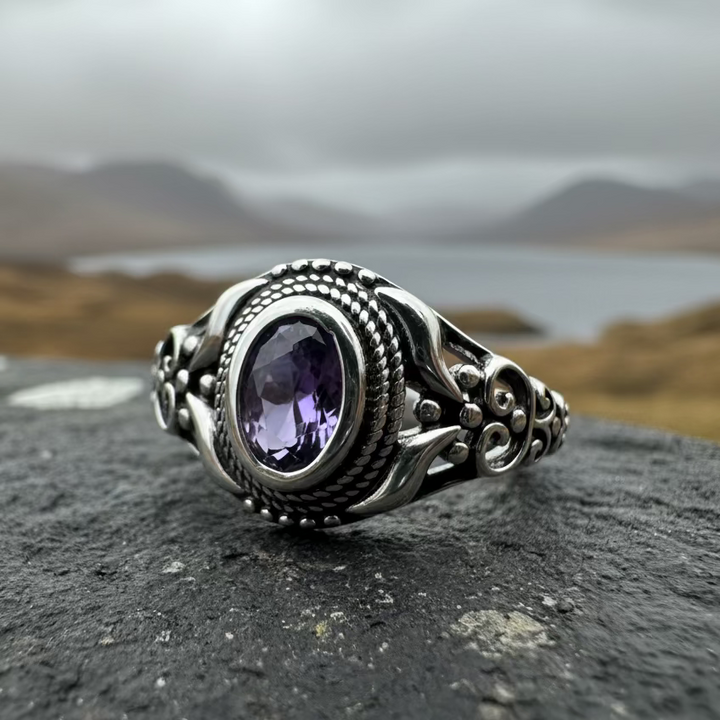
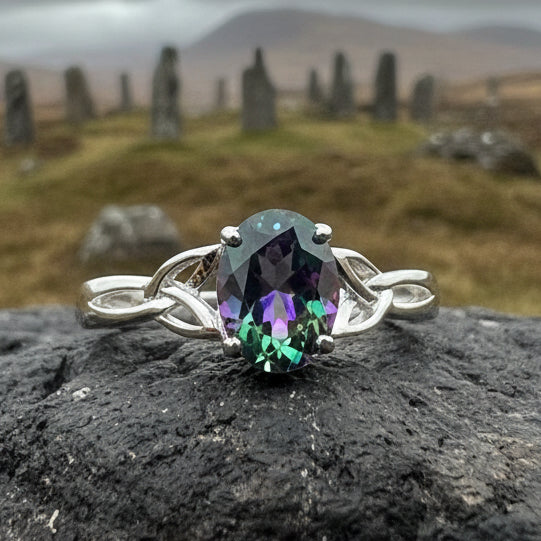
Scottish Twilight Celtic Ring in Sterling Silver
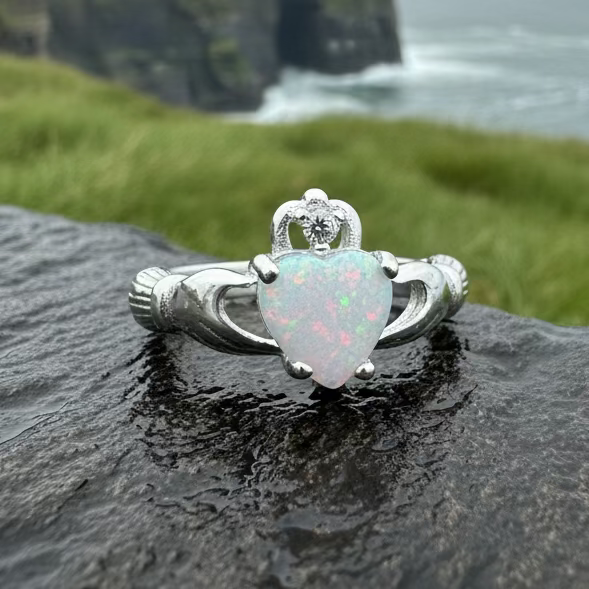
White Fire Opal Irish Claddagh Ring in Sterling Silver
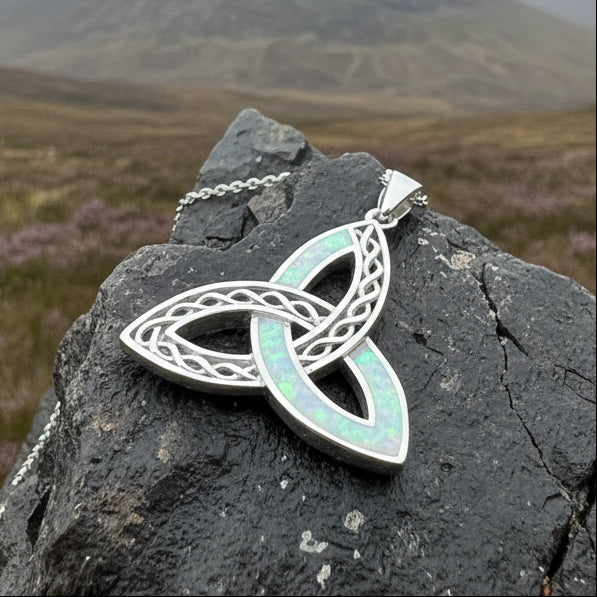
Fire Opal Celtic Knot Necklace in Sterling Silver
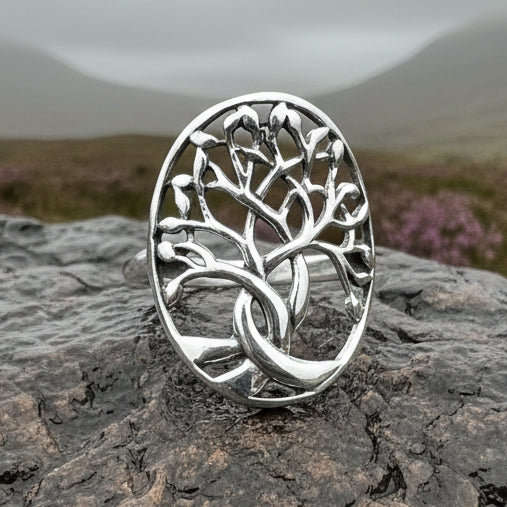
Rona Celtic Tree of Life Ring in Sterling Silver
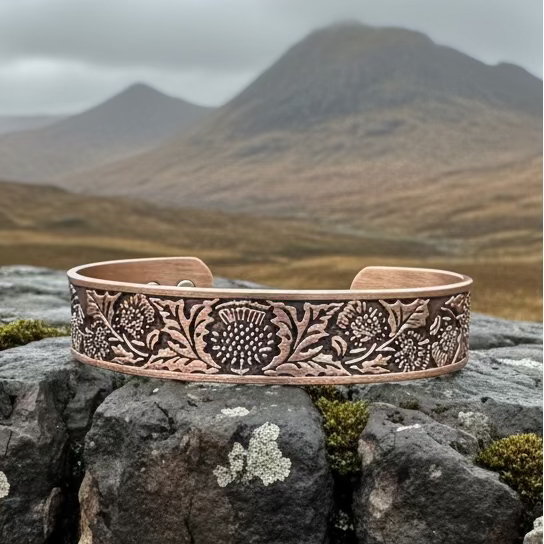
Scottish Thistle Copper Cuff Bracelet

Irish Saint Brigid Cross Necklace - Handmade in Ireland
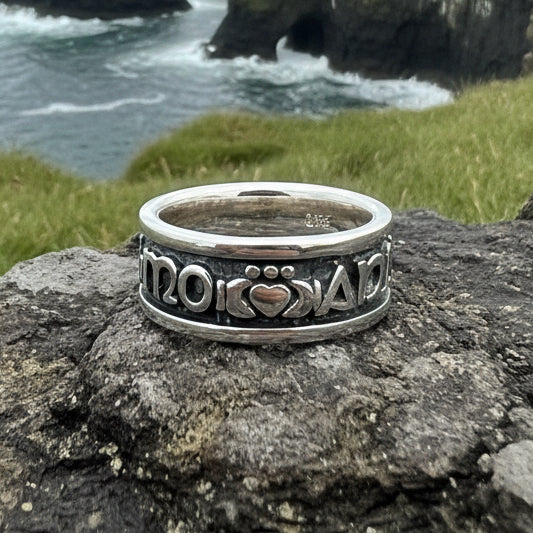
Irish Gaelic Soulmate Ring in Sterling Silver
Christian Adoption and the "Holy Trinity" Interpretation
With the arrival of Christianity in Ireland around the 5th century CE (credited to St. Patrick), the Trinity Knot was repurposed to represent the Holy Trinity: Father, Son, and Holy Spirit. This adaptation was seamless due to the knot's three interconnected points and endless loop, symbolizing unity and eternity—core Christian tenets.
Monastic illuminators and stone carvers embraced it, as seen in the Durham Gospels (c. 700 CE) and Celtic high crosses. Legend attributes St. Patrick using a similar three-leaf shamrock to explain the Trinity, though the knot itself likely evolved independently. This Christian lens dominated from the medieval period onward, turning a pagan symbol into a tool for evangelism.

Why People Wear the Trinity Knot Today
In modern times, the Trinity Knot transcends its historical roots, worn for spiritual, cultural, and aesthetic reasons:
Key Takeaways
- Discover the rich meaning and heritage behind the trinity knot: a timeless symbol in celtic jewelry.
- Explore handcrafted Celtic jewelry pieces inspired by these timeless traditions.
- Browse our collection to find an authentic piece that connects you to Celtic culture.
- Religious Significance: Christians, especially Catholics in Ireland and the diaspora, wear it as a subtle declaration of faith in the Trinity. Pendants and rings serve as daily reminders of divine unity, often gifted at baptisms, confirmations, or weddings.
- Celtic Heritage and Identity: For those of Irish, Scottish, or Welsh descent, it's a proud emblem of ancestry. During festivals like St. Patrick's Day or Highland games, jewelry featuring the knot connects wearers to ancient traditions. Irish Americans, in particular, popularized it in the 20th century through immigration and cultural revival.
- Symbolism of Triads in Life: Beyond religion, it represents personal trios—mind, body, spirit; past, present, future; or mother, father, child. In relationships, it signifies eternal love (similar to infinity symbols). Neopagans and Wiccans reclaim its pre-Christian meaning, associating it with the maiden-mother-crone goddess archetype or elemental forces.
- Aesthetic and Fashion Appeal: Its geometric elegance appeals in minimalist jewelry. Designers incorporate it into earrings, cufflinks, and tattoos. Celebrities and influencers have boosted its popularity, blending it with contemporary styles.
- Protection and Good Luck: In folklore, Celtic knots were believed to ward off evil due to their complexity (confusing malevolent spirits). The Trinity Knot, with its protective loop, is worn as a talisman for safety and harmony.

Conclusion
The Trinity Knot's journey from Iron Age engravings to 21st-century adornments illustrates the resilience of Celtic symbolism. Rooted in ancient artistry, adapted by Christian monks, and revitalized in jewelry, it embodies interconnectedness in an increasingly fragmented world. Whether donned for faith, heritage, or beauty, wearing a Trinity Knot is a quiet nod to eternity—one loop at a time. For authentic pieces, explore Irish jewelers specializing in Celtic designs.

