

The Hidden Meaning Behind 10 Celtic Knots (One Might Be Your Ancestor's Secret)

Have you ever seen a beautiful necklace or ring with twisting lines that never seem to end? Those are Celtic knots! They come from the ancient Celtic people who lived in places like Ireland, Scotland, and Wales over 1,000 years ago.
Celtic knots are not just pretty designs—they hide deep meanings about life, love, the world, and even offer strength and encouragement during challenging times. People wear them today in Irish jewelry (often handmade in Ireland), Scottish jewelry (frequently handmade in Scotland), and Welsh jewelry to feel connected to their ancestors.
In this article, we'll explore 10 famous Celtic knots, plus an important bonus knot. We'll learn what they mean and why your family might have used one as a secret symbol. At the end, check out Celtic Crystal Designs—a great online store for real Celtic jewelry made with care.

Discover the Meanings of Ancient Celtic Knots
-
Description: Three points that loop together without a start or end.
-
Meaning: Things that come in threes (past, present, future; mind, body, spirit). In Christian times, it represented the Father, Son, and Holy Spirit.
-
Fun fact: Irish moms wear Trinity knot necklaces to protect their kids. Look for a beautiful Celtic trinity knot necklace or a Celtic trinity knot ring in Irish jewelry, often handmade in Ireland!
-
Description: Two lines weave into a heart shape that loops forever.
-
Meaning: Eternal love—no beginning, no end.
-
Usage: Couples in Scotland give this knot on rings or bracelets for weddings, often choosing pieces handmade in Scotland.
-
Secret tip: If your Scottish grandma had a "never-ending" ring, this might be her love message to grandpa.
-
Description: Four loops form a square in the middle, like a shield.
-
Meaning: Protection against bad luck or evil spirits.
-
Usage: Ancient warriors drew it on shields. Today, it's in Welsh jewelry for strength during tough times, like exams or sports, offering a tangible symbol of resilience.
-
Description: Named after the Irish word for "oak tree," it looks like twisted roots.
-
Meaning: Power, wisdom, and destiny (the oak was super strong to Celts), symbolizing inner strength and resilience when facing life's challenges.
-
Usage: Hikers in Ireland wear Dara pendants for good luck on adventures.
The Sailor's Knot
5.
-
Description: Two ropes tie into one big loop.
-
Meaning: Friendship and coming back together; a wish for safe trips home.
-
Usage: Sailors from Scotland and Ireland used it. Scottish jewelry, frequently handmade in Scotland, often has this on keychains for travelers.
-
Description: Branches and roots connect in a circle.
-
Meaning: How everything in nature is linked—earth, sky, and family, symbolizing enduring strength and the resilience of connection.
-
Usage: Welsh families put it on brooches to honor ancestors. One branch might represent your great-great-grandpa!
-
Description: Four corners with loops, like a cross with curves.
-
Meaning: The four seasons, four directions (north, south, east, west), or four elements (earth, air, fire, water). In Irish jewelry, it's for balance in life, providing a sense of stability and inner strength.
-
Description: Not a full knot, but it has heart, hands, and crown with knot borders.
-
Meaning:
-
Heart = love
-
Hands = friendship
-
Crown = loyalty
-
Origin: From Ireland, it's huge in rings, often handmade in Ireland and crafted in sterling silver or pewter, or even featuring unique Connemara marble or mystical moonstone accents.
-
Wearing: Wear it with the heart pointing in for "taken" or out for "single."
-
Description: One line spirals out from the center.
-
Meaning: Growth, like a baby becoming an adult or the sun rising.
-
Usage: Ancient Celts in Wales carved spirals on stones. Welsh jewelry uses it in earrings for personal journeys.
-
Description: Lines twist forever with no breaks.
-
Meaning: Life goes on, even after death—rebirth and the cycle of everything.
-
Usage: Scottish clans wore it on tartan pins.
-
Ancestor's secret? This could be a family's way of saying "We'll meet again."
-
Description: Three interconnected spirals radiating from a central point, often moving in a continuous, cyclical direction.
-
Meaning: Represents motion, progress, personal growth, and the cycles of life (birth, death, rebirth), offering a powerful symbol of resilience and the ability to overcome adversity. It can also symbolize the three realms: land, sea, and sky, or past, present, and future.
-
Usage: One of the oldest Celtic symbols, found carved on ancient megalithic sites like Newgrange in Ireland. Today, it's a powerful motif in Irish jewelry, frequently appearing on pendants, earrings, and brooches, often handmade in Ireland and crafted from sterling silver, sometimes featuring the unique green of Connemara marble or the ethereal glow of moonstone.
-
Ancestor's secret? If your family has roots in ancient Ireland, this symbol might have been a very early sign of their connection to the land and its enduring cycles.

The Celtic Love Knot: A Timeless Symbol for Wedding Rings and Eternal Jewelry
Among the myriad of Celtic knots, the Celtic Love Knot holds a particularly cherished place, especially in the realm of romantic commitment. Its design, featuring two lines weaving into a continuous heart shape, perfectly encapsulates the concept of eternal love—a bond with no beginning and no end.
This profound symbolism makes the Celtic Love Knot an incredibly popular choice for wedding rings, engagement rings, and other significant pieces of commitment jewelry. Couples often choose this knot to represent their unending devotion and the intertwined nature of their lives.
Popular Materials for Celtic Love Knot Jewelry
You'll find exquisite Celtic Love Knot jewelry crafted in various precious materials. Many pieces are lovingly handmade in Ireland or handmade in Scotland, ensuring authenticity and a connection to ancient traditions. Popular choices include:
Shop Related Pieces
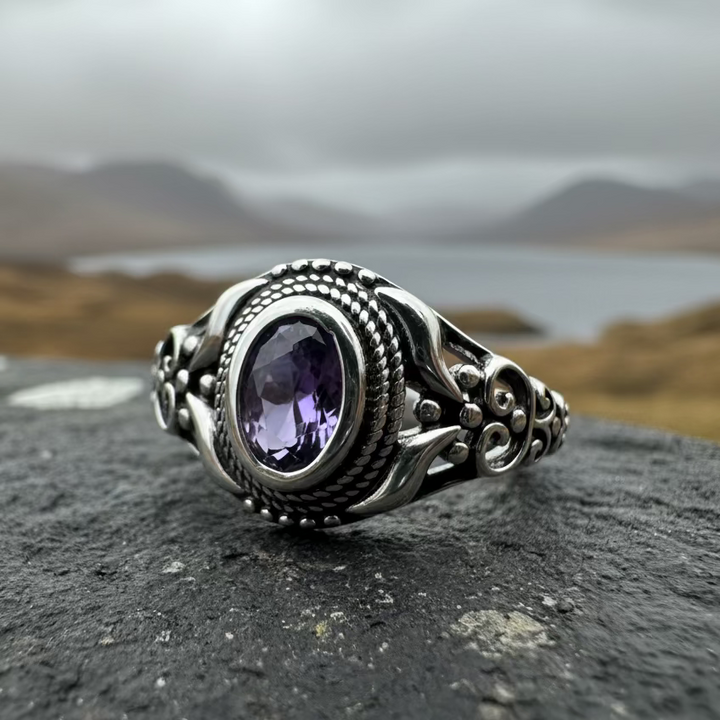
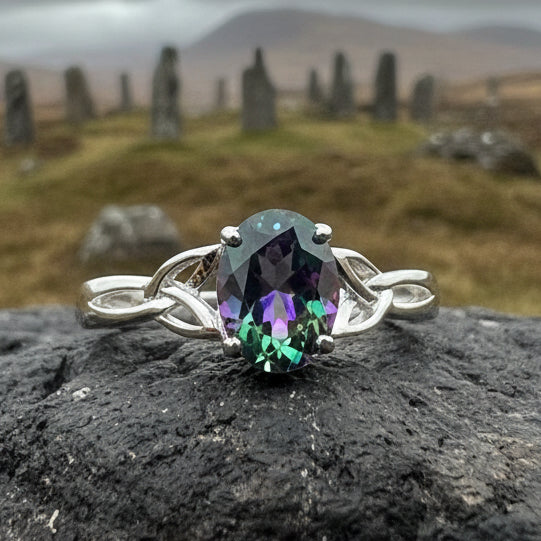
Scottish Twilight Celtic Ring in Sterling Silver
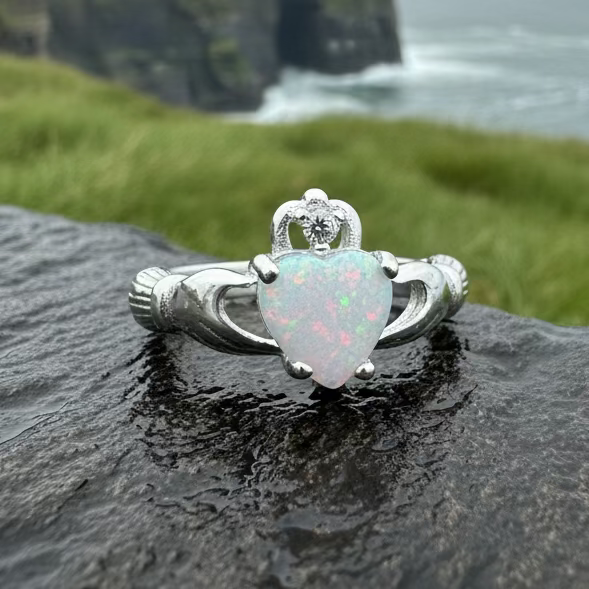
White Fire Opal Irish Claddagh Ring in Sterling Silver
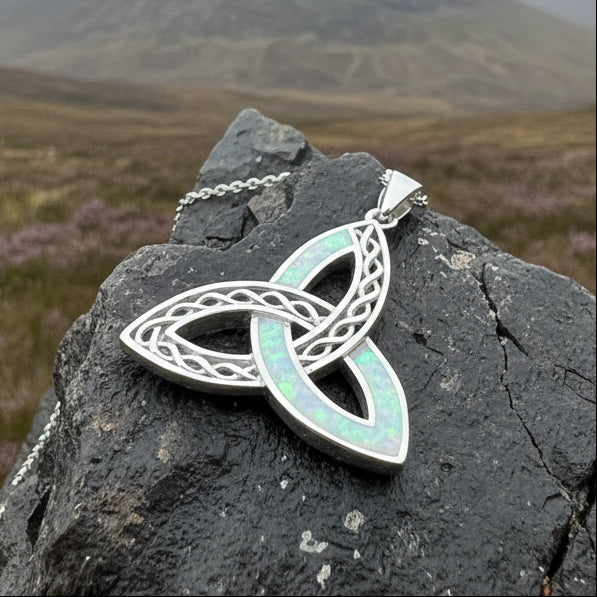
Fire Opal Celtic Knot Necklace in Sterling Silver
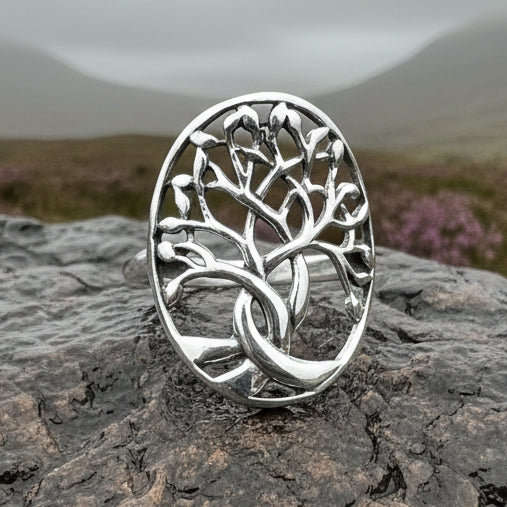
Rona Celtic Tree of Life Ring in Sterling Silver
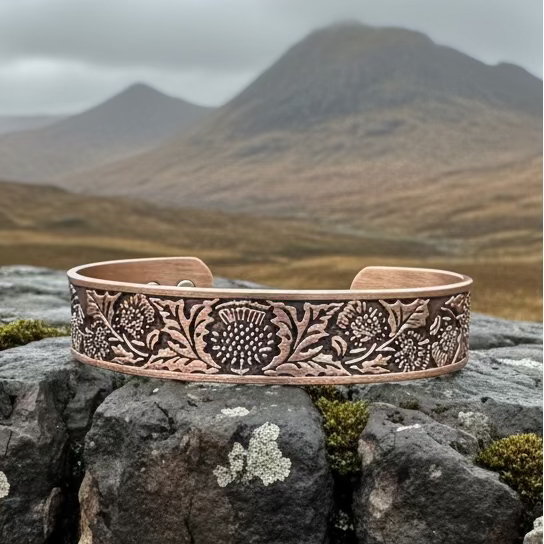
Scottish Thistle Copper Cuff Bracelet

Irish Saint Brigid Cross Necklace - Handmade in Ireland
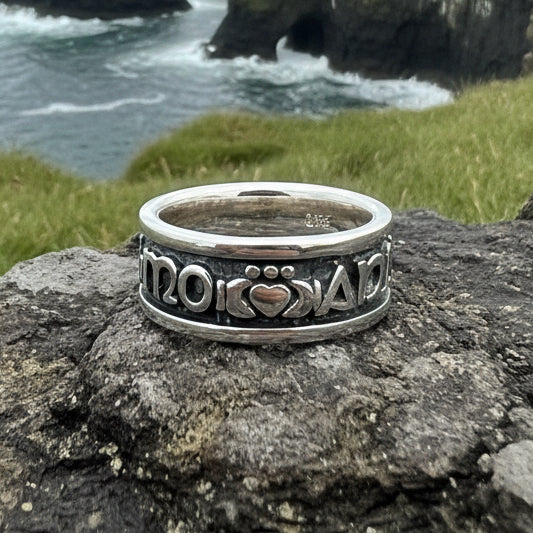
Irish Gaelic Soulmate Ring in Sterling Silver
-
Sterling Silver: A classic and durable choice, offering a timeless elegance.
-
Gold: For those seeking a more luxurious and traditional wedding band.
-
Connemara Marble: Unique green marble from Ireland, adding a touch of the Emerald Isle's natural beauty.
-
Moonstone: A mystical gem often incorporated for its ethereal glow and connection to intuition and new beginnings.
Whether it's a subtle engraving on a wedding band or a prominent design on a pendant, the Celtic Love Knot serves as a beautiful and meaningful declaration of enduring affection, passed down through generations as a testament to lasting love.

Why Wear Celtic Knots Today?
Wearing Celtic knots today is more than just a fashion statement; it's a connection to a rich heritage and a source of personal meaning. Here's why these ancient symbols remain relevant:
-
Celtic knots are more than art—they're stories from the past.
-
They offer strength and encouragement, serving as a reminder of resilience during difficult periods.
-
Irish jewelry, often handmade in Ireland, is crafted from sterling silver or pewter with green stones for Ireland's hills, or features the unique green hues of Connemara marble.
-
Scottish jewelry, frequently handmade in Scotland, uses bold designs for clan pride, frequently in sterling silver or pewter.
-
Welsh jewelry often incorporates the iconic Welsh dragon symbol or adds fiery red gems.
-
Wearing one connects you to history. Maybe your last name is Irish (like O'Brien) or Scottish (like MacDonald)—a knot could be your family's hidden code!
Celtic Knot Jewelry: Perfect Family Heirlooms
Celtic knot jewelry isn't just beautiful; it's designed to be cherished and passed down through generations, becoming a tangible link to your family's past and future.
-
Durability: Crafted from durable materials like sterling silver, often handmade with care in Ireland or Scotland, these items of celtic jewelry are built to last for generations.
-
Timeless Message: Each knot carries a timeless message—be it eternal love, strength, resilience, or connection to nature—that can be passed down, telling a unique family story of endurance and hope.
-
Legacy: Imagine a celtic trinity knot necklace or a celtic trinity knot ring, perhaps featuring a beautiful piece of Connemara marble or a shimmering moonstone, becoming a cherished symbol worn by mothers and daughters through the ages, linking them to their shared heritage, the ancient wisdom of their ancestors, and a continuous source of encouragement.
These are not just gifts; they are legacies, imbued with personal history and cultural significance, destined to be treasured for centuries.

Where to Buy Real Celtic Jewelry
Want your own Celtic knot ring, Celtic knot pendant, or other piece of Celtic jewelry? Finding authentic, high-quality pieces is key to truly connecting with the rich heritage these symbols represent. Celtic Crystal Designs is a great place to start your search!
-
They sell handmade pieces, often featuring sterling silver, pewter, Connemara marble, or even mystical moonstone.
-
All pieces come with real meanings, like celtic trinity knot necklaces, celtic trinity knot rings, or Dara celtic knot rings.
-
Everything is high-quality and ships fast.
Visit CelticCrystalDesigns.com to find one that feels like your ancestor's secret.
Find Your Ancestor's Secret Today!
Explore authentic, handcrafted Celtic jewelry with deep meanings and lasting quality.
References & Further Reading
To ensure the accuracy and depth of the information presented, this article draws upon established historical and cultural research. For those wishing to delve deeper into the fascinating world of Celtic knots and their meanings, we recommend the following resources:
-
Meehan, Bernard. The Book of Kells: Art, History, and Symbolism. Thames & Hudson, 2012.
-
Megaw, Ruth and Vincent. Celtic Art: From Its Beginnings to the Fifth Century AD. Thames & Hudson, 2001.
-
Bain, George. Celtic Art: The Methods of Construction. Dover Publications, 1973.
-
National Museum of Ireland – Archaeology. Official collections and research on ancient Irish artifacts. (Visit Website)
-
Journal of Celtic Studies. Peer-reviewed articles on Celtic language, literature, history, and culture.
Disclaimer: While every effort has been made to provide accurate and well-researched information, interpretations of ancient symbols can vary. This article aims to present commonly accepted meanings and historical contexts.
Which knot speaks to you? Put it on and carry a piece of ancient magic, strength, and encouragement every day!
Key Takeaways
- Discover the rich meaning and heritage behind the hidden meaning behind 10 celtic knots (one might be your ancestor's secret).
- Explore handcrafted Celtic jewelry pieces inspired by these timeless traditions.
- Browse our collection to find an authentic piece that connects you to Celtic culture.